
Beaver County Warrant Search Fallback
No official Beaver County Sheriff active-warrant search portal was located in the reviewed county sources. That does not mean warrants are not public in all contexts. It means a Beaver County warrant lookup should follow the record trail: public court dockets first, then the issuing court, then the Sheriff's Office for Common Pleas bench-warrant routing, then a formal records request when a public online search is not available or complete.
- Search the UJS docket for the person's name, docket number, citation number, OTN, or complaint number.
- Check whether the event is tied to Common Pleas, a Magisterial District Court, domestic relations, probation, parole, or a traffic or summary case.
- For Common Pleas bench warrants, contact the Sheriff's criminal line or the issuing court office for routing.
- For MDJ or traffic warrants, contact the specific Magisterial District Court that issued the underlying case.
- Use the Court Records Manager request process for non-online MDJ records or the Right-to-Know Law route for legally available sheriff agency records.
This fallback chain is safer than relying on third-party warrant sites. It also avoids confusing a docket entry, an old failure-to-appear event, or a resolved warrant with a current active warrant.
Beaver County Sheriff Warrant Role
The Beaver County Sheriff's Office handles court security, courtroom security, courthouse checkpoints, prisoner transport, juvenile transport, PFA service, civil process, K9 units, and Emergency Services Unit duties. The directory identifies Tony Guy as Sheriff. For warrant routing, the sheriff's criminal contact number is 724-773-8549, while the civil number is 724-770-4600. Those numbers should be used for office routing, not emergency confirmation.
The Sheriff's Office page documents the local court-security and prisoner-transport role connected to warrant enforcement.
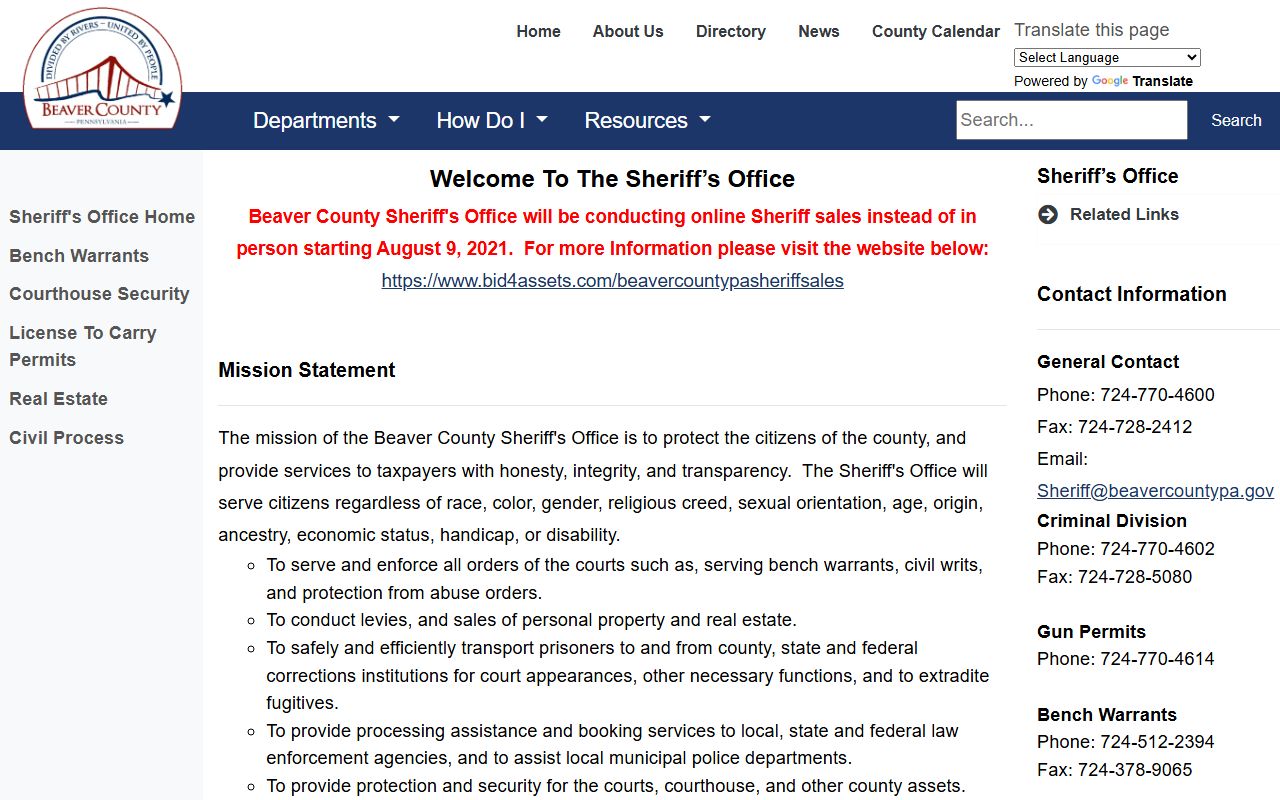
Because the Sheriff's Office is part of the court process, it is the local point of reference for Common Pleas bench-warrant handling after the issuing court is identified.
Beaver County Sheriff's Office
810 Third Street
Beaver, PA 15009
724-773-8549 criminal
724-770-4600 civil
Beaver County Bench Warrants
The official Sheriff's bench-warrants page states that the Sheriff's Office is responsible for all bench warrants issued by the Court of Common Pleas. The page names three Common Pleas categories: failure to appear in criminal cases, domestic relations warrants, and warrants for violation of probation or parole.
The county bench-warrant page is the key local source for Common Pleas warrant responsibility.
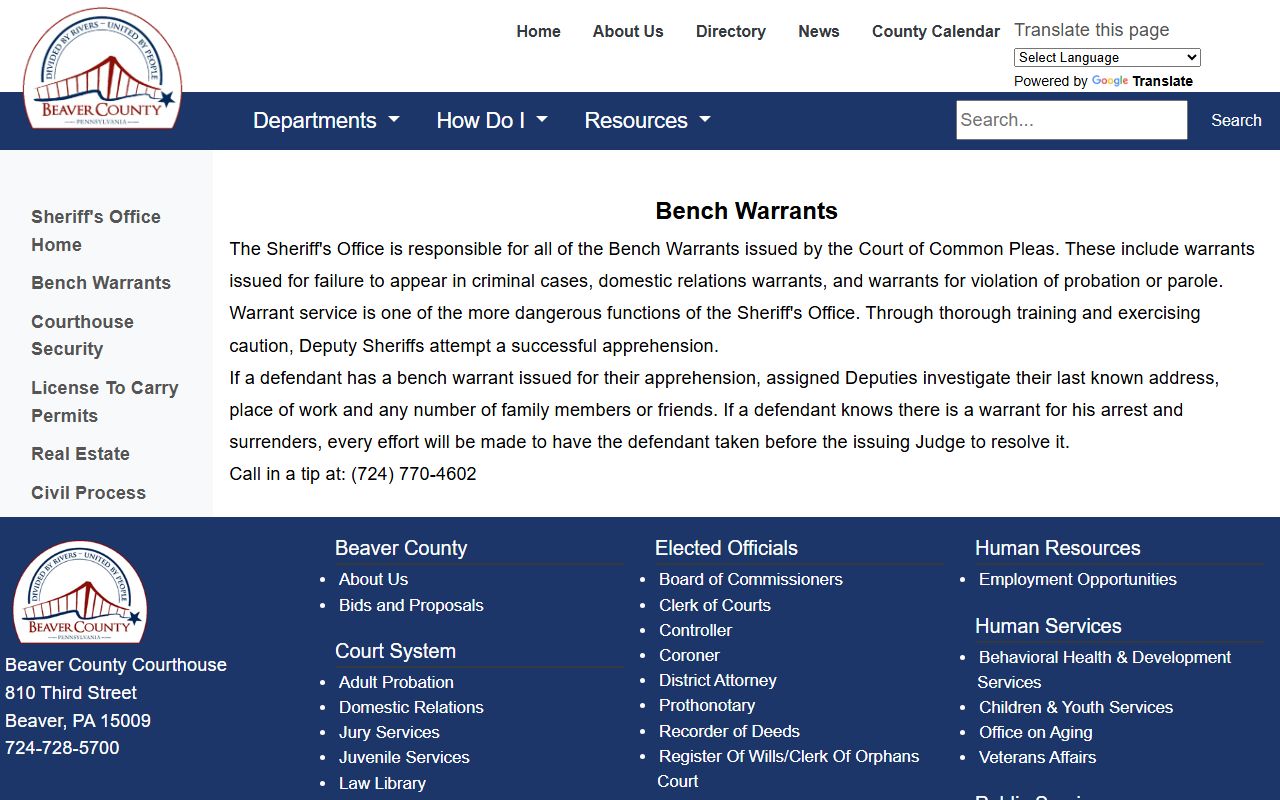
That source supports a narrow rule: Common Pleas bench warrants route through the Sheriff's Office, while MDJ and traffic matters may require the specific lower court.
| Bench-Warrant Type | Likely Source | Verification Channel |
|---|---|---|
| Failure to appear in criminal case | Court of Common Pleas criminal docket | UJS docket, Clerk of Courts, Sheriff's criminal line, attorney. |
| Domestic relations warrant | Common Pleas domestic relations matter | Issuing court office and Sheriff's Office routing. |
| Probation or parole violation | Common Pleas supervision or violation case | Criminal docket, Adult Probation context, Sheriff, counsel. |
| Summary or traffic failure to appear | Magisterial District Court docket | Specific MDJ court, UJS, PAePay if payment is eligible. |
Beaver County MDJ Warrant Checks
Magisterial District Courts in Beaver County handle summary offenses, traffic matters, landlord-tenant cases, small civil matters, preliminary arraignments and hearings, bail in many cases, and nonappearances that may trigger warrant activity. A missed traffic, summary, or preliminary matter may not be a Common Pleas bench warrant at first. The issuing MDJ court should be identified from the docket, citation, complaint, or notice.
The official Magisterial District Judge locations page lists the district offices, judges, addresses, phone numbers, fax numbers, and municipalities served. If UJS shows an MJ docket, use that court's number rather than calling a random office. If payment is the issue, PAePay may help only when the case is eligible for online payment.
For non-online MDJ records, Beaver County's MDJ records page routes requests to the Court Records Manager by mail, sealed hand delivery, email, or fax. A denial may be appealed within 15 business days to the President Judge of the Court of Common Pleas.
Search Beaver County Warrant Dockets
Pennsylvania UJS Case Search can show public docket entries tied to criminal Common Pleas cases and Magisterial District Court cases. It is not a complete warrant-verification system. It may show bench-warrant entries, failure-to-appear history, bail events, disposition entries, or later warrant resolution entries in a specific public case. It may also lag behind recent court action.
| Search Field | Use in a Beaver County Warrant Lookup |
|---|---|
| Participant name | Useful when the person does not have the docket number, but name matches must be checked carefully. |
| Docket number | Best when a court notice, old docket, citation, or attorney provides the exact case. |
| OTN | Helpful for criminal cases tied to an Offense Tracking Number. |
| Citation number | Useful for traffic or summary matters that may have failure-to-appear entries. |
| Complaint or incident number | Can connect the search to law-enforcement identifiers when known. |
| County | Select Beaver County to narrow statewide results and reduce false matches. |
Note: A docket entry can show warrant activity without proving the warrant is still active today.
Beaver County Warrant Record Fields
Because Beaver County does not publish an official public active-warrant search list in the reviewed sources, warrant details are most likely to appear in court docket context or through the issuing office. The record fields below are the practical inventory to check when a warrant-related entry is found.
| Field | What It Can Show |
|---|---|
| Docket number | The case tied to the warrant, such as a Common Pleas criminal docket or an MJ docket. |
| Issuing court | Whether the matter came from Common Pleas, domestic relations, probation/parole, or an MDJ court. |
| Participant or defendant | The person named in the case. Confirm identity before drawing conclusions. |
| Case type | Criminal, traffic, summary, domestic relations, probation/parole, or other court category. |
| Charge or citation | The underlying offense, citation, complaint, or docket event that led to the warrant entry. |
| Warrant entry date | The date the docket shows warrant issuance or related court action. |
| Reason | Failure to appear, domestic relations issue, violation of probation or parole, or other court reason. |
| Resolution entry | Lifted, served, recalled, hearing held, payment made, bail posted, or other later docket event. |
Resolve a Beaver County Warrant
An outstanding warrant should be verified through the issuing court or legal counsel before a person appears at a courthouse, jail, or sheriff's office. A person with a possible Common Pleas bench warrant should identify the docket, contact counsel, and ask the Sheriff's Office or Clerk of Courts about the correct surrender or hearing procedure. A person with a traffic or summary MDJ matter should contact the issuing Magisterial District Court and check whether PAePay is available for that case.
- Write down the docket number, issuing court, charge or citation, and any warrant date shown in UJS.
- Call the issuing court or attorney to confirm whether the warrant is active, recalled, or resolved.
- Ask what appearance, payment, bail, surrender, or hearing procedure applies to that specific case.
- Do not ignore a failure-to-appear entry. It can affect bail, custody status, license issues, or later court dates.
- Use official court and sheriff channels instead of third-party warrant databases.
Important: Anyone who believes a warrant is active should speak with counsel before appearing or attempting surrender.
Restricted Beaver County Warrants
Not every warrant or warrant-related event is public. Sealed warrants, juvenile warrants, active investigative search warrants, protected domestic information, and restricted identifiers should not be expected in public-facing records. Public docket access may also be limited after expungement, limited access, or sealing. A lack of public results is not proof that no warrant exists.
Pennsylvania 18 Pa.C.S. 9122.1 addresses petitions for limited access to qualifying criminal history information.
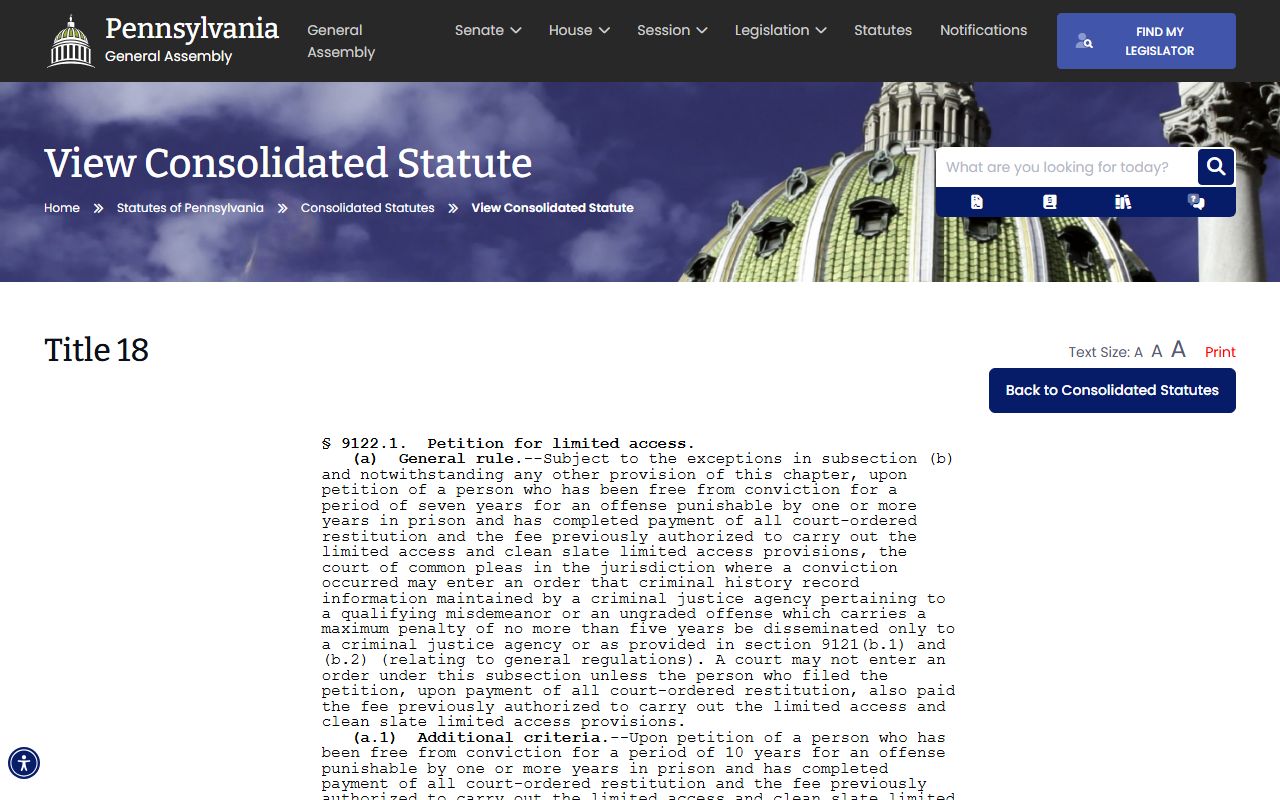
Limited-access rules can explain why an older Beaver County warrant-related docket or charge is no longer visible through ordinary public search tools.